


Visual Merchandising in Marketing: Definition, Elements, and Effective Methods
What is Visual Merchandising?
Visual merchandising is the intentional showcasing and exhibition of products within a retail setting to appeal to consumers and create sales. It is an art-and-science blend; the convergence of design, light, color, and layout employed to narrate a brand’s story projectively and incite consumer action.
The final goal of visual merchandising is to enhance the shopping experience to convert browsers into buyers. Visual merchandising converts value into sensory attractiveness of products, creates emotions, and drives impulse purchases.
Visual merchandising is also a connection between marketing strategy and consumer psychology. Visual merchandising bridges the gap between marketing messages and experiential life, and makes the brand campaigns reflect visually coherently in the store and online.
Importance of Visual Merchandising in Marketing
A carefully strategized merchandising can reverse the performance of the retail firm. Here’s how it is imperative today in marketing:
- Enhances brand image: Consumers like to gauge the quality of the brand from the way the products are displayed.
- Raises footfalls and dwell time: Attractive displays attract people and retain them for longer periods.
- Enhances impulse buy: Creative positioning of goods boosts surprise purchase.
- Streamlines customer experience: Considered store layout streamlines navigation and satisfaction.
- Creates brand image: Strong visual identities enable brands to be seen in crowded retail environments.
Key Features of Visual Merchandising
Successful visual merchandising is based on five key elements fused together to produce successful displays.
1. Focal Point
All visual displays need a single focal point that will grab the eye immediately. A hero product, mannequin, or feature wall can be used as the focal point that will grab the eye and establish the tone.
2. Signage
Signage speaks for itself in terms of crucial information such as prices, promotions, or benefits. Clear fonts, consistent brand, and brevity should be used to direct customers comfortably.
3. Color
Colors stimulate emotions and guide purchases. Red warm and orange warm colors induce urgency, while blue cool and green cool colors induce calmness and confidence.
4. Lighting
Lighting frames how customers view products. Accent lighting focuses attention on merchandise on display, ambient lighting evokes ambience, and task lighting increases legibility, all of which play roles in store atmosphere.
5. Positioning
Where products are located can significantly support directing customer traffic. Products at eye level move the most quickly, and effective placement drives consumers into other store areas.
Types of Visual Merchandising
In-store Visual Merchandising
Begin designing layout, shelving, mannequins, props, and point-of-purchase (POP) displays to generate maximum customer traffic and interaction.
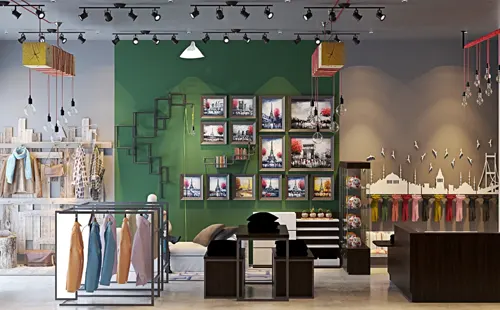
Image Source: Strikingly Blog

Image Source: Pinterest – Retail Festive Window Display
Window Displays
Innovative window displays tell brand narratives, promote new collections, or embrace seasonal fashion, welcoming pedestrians in.
Digital Visual Merchandising
Everything from product images all the way to AR/VR try-ons and virtual store walks replicating offline shopping experiences online.
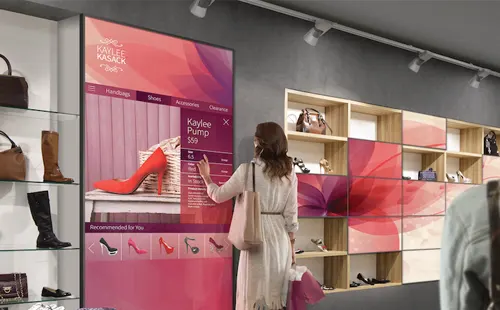
Image Source: Samsung Insights

Image Source: Pixartprinting
Exterior Visual Merchandising
Signage, exterior illumination, and entrance design set the first impression, beckoning consumers inside.
Interactive & Experiential Merchandising
Sensory and immersion experiences, such as touch screens, scent areas, or demo pedestals, invite consumer interaction and additional brand interaction.

Image Source: IIAD
Visual Merchandising Methods and Techniques
Companies will apply simple, everyday methods to maximize display power with Visual Merchandising Techniques such as:
1. Involve All Five Senses
Sight and light vision (color and light), hearing (music), smell (fragrance in the air), touch (touch samples), and taste (restaurants or grocery stores) all impact mood and memory.
2. Apply Design Principles
- Balance: Employ symmetry or asymmetry for visual balance.
- Contrast: Emphasize hero products by color or light.
- White Space: Minimize clutter to allow displays to “breathe.”
- Unity: Maintain consistency with the overall brand theme.
3. Storytelling Displays
Employ themes and narratives, e.g., holiday habits or lifestyle dreams, to connect on an emotional level with customers and products.
4. Cross-merchandising
Sell products together that are companions (e.g., a handbag with matching shoes) to promote add-ons.
5. Seasonal & Thematic Refreshes
Seasonally refresh, employing holiday, festival, or trend-based refreshes to maintain customer interest.
6. Data-Driven Merchandising
Try various formats with analytics, track performance, and refine based on data.
7. Green Visual Merchandising
Use green packaging, recycled displays, and reclaimed packaging to attract price-sensitive buyers.
Visual Merchandising as a Marketing Tool
Creates Brand Identity
Visual merchandising solidifies the color scheme, logo, and brand message, providing consistency across touchpoints.
Improves Customer Journey
Through stimulation of senses and guidance, merchandising converts browsing to buying.
Supports Promotions & Campaigns
Store faciliations can reflect campaigns online and benefit overall marketing performance.
Creates Shareable Moments
Facilitations that are Instagrammable will prompt a photo to be taken and shared socially, generating word-of-mouth marketing.
The Best Way to Optimize Your Visual Merchandising Strategy
Step 1 – Get to Know Your Audience
Learn who your customers are, their preferences, and buying motivations.
Step 2 – Have Clear Objectives
Decide on awareness, engagement, or conversion as your objective prior to booking displays.
Step 3 – Test, Measure, and Design
Design through building customer and sales intelligence.
Step 4 – Update Displays Periodically
Update graphics to keep them in current seasons and trends, thus becoming fresh.
Step 5 – Brand Consistency
Your physical stores and online stores must both have the same brand voice.
Visual Merchandising Mistakes to Evade
- Dense or overcrowded stands
- Poorly or insufficient lighting
- Inadequate tracking of customer movement habits
- Gaps in cleaning or maintenance
- Unclear branding or messaging
Successful Visual Merchandising Examples
- Apple Store: Recognized for its minimalist design and open layouts that focus on product interaction.
- Zara: Deploys thematic stories and seasonal stories in a bid to enhance collections’ popularity.
- IKEA: Deploys the path layout direction that supports discovery and aids add-on purchases.
Role of a Visual Merchandiser
Visual merchandisers are creative experts tasked with developing and deploying display concepts.
Key responsibilities are layout designing, product presentation concept development, marketing coordination, and determining sales impact.
Major qualifications: Creativity, design sense, consumer psychology knowledge, and marketing proficiency.
Conclusion
Visual merchandising is a core element of customer perception definition, experience enhancement, and buying activation. Visual merchandising is an extension of marketing that brings together emotional storytelling and functional design in an effort to drive purchasing behavior.
Merchandisers investing time in conscientious merchandising not only maximize their in-store effect but also build long-term brand loyalty.
FAQs of Visual Merchandising in Marketing
Product, visual, retail, omnichannel, and digital merchandising.
It is a strategy by which design aspects such as lighting, color, and placement are utilized to drive buying decisions.
Convenience, shopping, specialty, and unsought goods.
Presentation, Placement, Promotion, and Pricing.
Color, lighting, signage, and layout.
They develop and implement in-store product displays to generate sales.
Window displays, mannequin displays, digital signage, and themed product zones.
Yes, visually communicating a brand’s marketing message to inform buyer.
Sustainable materials, digital signage, AR experiences, and personalized store experiences.
Get a Free Consultation & Quote
Ready to light up your brand? Connect with Brandola today.
Let your business glow brighter with a custom glow sign board from Brandola.