

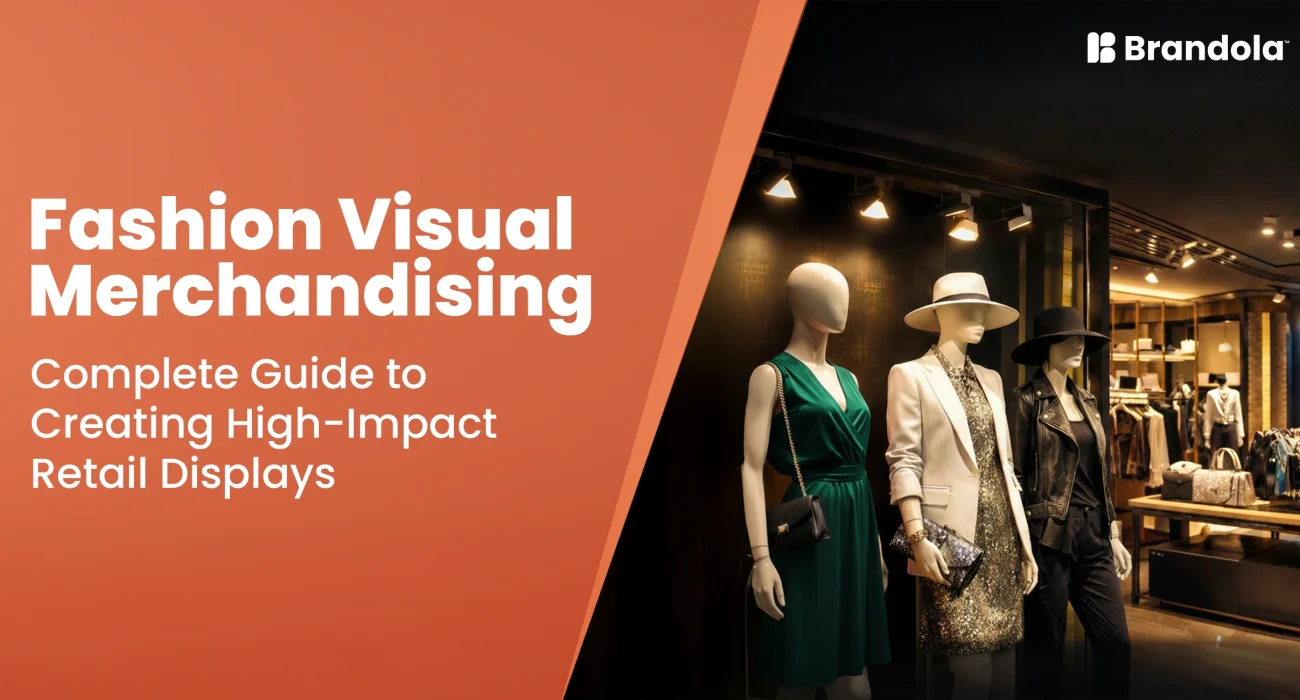

Fashion Visual Merchandising: Complete Guide to Creating High-Impact Retail Displays
Today’s competitive retail environment has transformed Fashion Visual Merchandising from simply making clothing look nice on a rack into a multidisciplinary field combining art, psychology, branding and technology to create experiential store settings that generate revenue.
Visual merchandising for the fashion industry involves using art and science to display clothing, accessories and other lifestyle items as a means of attracting attention, creating positive perceptions of brands and influencing customer purchasing behaviors. In today’s omni-channel world, with consumers shopping online and buying in stores (and vice versa), it is necessary for retailers to create visually appealing retail displays that will cause customers to stop and look.
Brandola’s Guide explores the reasons behind this shift, the psychology involved in consumer behaviour, strategies for creating successful retail displays, tools that can help create effective retail displays, and what changes are expected to occur in fashion retail environments going forward.
Why Fashion Visual Merchandising Is Crucial for Retail Success
- Aesthetic Window Display to Drive Store Traffic
A window display that is visually appealing will have a direct correlation on the number of times consumers enter your store. Once they are inside the store, an attractive product display will assist them in locating high margin and current product lines, as well as assisting them in converting to sales. - Brand Consistency
The consistent use of colors, display style and branding storylines will create a brand image that is easily recognized by consumers. - Product Displays To Engage Consumers
Displays with interactive features, mannequin dressed in complete outfits and visual displays will attract consumer interest and promote extended shopping time, which increases the likelihood of purchase. - Seasonal Product Displays
Seasonal product displays will allow you to showcase seasonal products and help you sell off old stock. - Emotional Connection with Consumers
Emotionally appealing displays of a brand’s lifestyle connection create an emotional bond with your target market.
The Psychology Behind Effective Visual Merchandising
- How Colors Influence Buying Decisions
The warm colors such as Red and Orange are known to stimulate a sense of urgency in customers, whereas cool colors have a calming effect that elicits an idea of high-end quality. Luxury brands often utilize muted color palettes to convey a level of sophistication. - Visual Hierarchy and Customer Eye Movement
Generally, customers view displays from left-to-right and look down at eye-level first when viewing products. To encourage customers to follow their normal viewing patterns, designers/merchandisers should include focal points throughout a display to lead the customer through a visual hierarchy. - Role of Lighting in Perception and Mood
The spotlight helps create drama, the warm lighting will help customers feel at ease in your store, and white lighting will allow them to see all of the details of a product. - Storytelling and Emotional Triggers in Displays
By using lifestyle themes (travel/festive celebrations/summer getaways), retailers are able to allow the customer to visualize themselves in the retailer’s “story.”
Types of Fashion Visual Merchandising
- Window Display Merchandising
Window Displays are your customers’ first point of contact with a store and the product that is being sold; it has to get across an image, an offer or a brand story in seconds. - In-Store Visual Merchandising
Zoning, Category Segmentation, Pathway Planning are all ways that visual merchandising can guide shoppers around your store. - Mannequin Styling and Zoning
Mannequins will display complete outfits and provide inspiration for styling. - Digital and Interactive Visual Merchandising
LED screens, Digital Lookbooks and QR Codes create an experience that bridges the customer’s online experience with their offline shopping experience. - Seasonal and Festive Merchandising (India-specific)
Merchandising for Diwali, Eid, Wedding Season & End of Season Sales have significant impact on the consumer’s buying cycle
15 Proven Tips for Creating Eye-Catching Fashion Visual Merchandising
1. Know Your Target Audience and Shopper Persona
Understand age group, spending capacity, and style preferences.
2. Align Displays with Brand Story and DNA
Luxury, streetwear, or ethnic — consistency is key.
3. Follow Global and Local Fashion Trends
Understand current global and local fashion trends so that you can take the most recent fashion trends from runways worldwide and adapt them to your customers’ personal tastes.
4. Invest in Strategic Lighting Design
Invest in strategic lighting design that highlights your best-selling items and new arrival displays.
5. Use the Rule of Three and Visual Balance
Use the “Rule of Three” when setting up your displays, and also use visual balance when doing this because odd-numbered groupings will always be more visually appealing than even-numbered groupings.
6. Apply the PARC Technique (Proportion, Attention, Rhythm, Contrast)
Apply the PARC technique to ensure that you have achieved visual balance in your displays by using proportion, attention, rhythm, and contrast.
7. Create a Strong Focal Point
Establish a focal point in your displays using bold props, bold colors, and/or lighting to draw your customers’ eyes directly to it.
8. Tell a Story Through Displays
Tell a story through your displays that relates to your customers’ lifestyles as well as the fashion products you’re promoting.
9. Plan Displays Around Festive and Sale Calendars
Set up your displays according to the seasonal, festive and sale calendars so that you can provide the most relevant and timely displays possible to your customers.
10. Keep Displays Fresh with a Visual Merchandising Calendar
Use a visual merchandising calendar to keep your displays fresh and exciting, and to prevent visual fatigue from happening.
11. Highlight In-Stock and High-Margin Products
Promote your in-stock high-margin products and make sure that there’s enough stock on hand of the products you choose to promote.
12. Utilize color blocking and texture contrast
Create eye-catching display arrangements.
13. Add digital screens and QR codes
Connect your customers with lookbooks and promotions.
14. Optimize for Instagram-Worthy Displays
Photo-friendly zones encourage organic marketing.
15. Track Performance and Improve Continuously
Analyze which displays drive higher conversions.
Fashion Visual Merchandising as a Storytelling Tool
- Turning Your Store into a Storytelling Canvas
Every store can tell a story based on themes that are relevant to your customer – summer vacation, festive glamour, sustainable living, etc. - Creating Authentic Brand Narratives
Your displays should show what you really believe in as a brand and not what looks good for everyone else. - Connecting Offline Displays with Online Campaigns
Using hashtags and QR Codes will help connect your physical campaign to your digital campaigns by allowing customers to share online using their mobile devices.
Materials and Elements Used in Fashion Visual Merchandising
- Mannequins and Props
These are vital to display the full look and theme. - Fixtures, Racks and Displays
High-quality custom fixtures can elevate the presentation of your products. - Lighting Systems and Lightboxes
They create a premium effect by creating a spotlight on an item or items and a high-end effect. - SEG Fabrics and Graphic Panels
High-recall branding visuals increase with high-impact branding. - Sustainable and Eco-Friendly Products
Eco-Friendly and Recyclable props and displays also provide a reflection of the brand as being conscious.
Role of Technology in Modern Visual Merchandising
- Digital Signage and LED Displays
Stores with dynamic content are visually appealing to consumers. - Interactive Mirrors and Smart Screens
Smart mirrors can increase consumer interaction in a retail setting through virtual try-on options. - Visual Merchandising Software and 3D Planning Tools
Retailers can now virtually lay out their store prior to implementing the layout using 3d planning tools. - AI and Data-Driven Merchandising Decisions
Using data allows retailers to optimize both product placement and inventory focus.
Visual Merchandising for Indian Fashion Retail
- Adapting Global Trends for Indian Consumers
Blend global silhouettes with local preferences. - Festive Visual Merchandising (Diwali, Eid, Wedding Season)
Bright colors, themed decorations, and curated collections make holiday sales work! - Mall vs High-Street Merchandising in India
Experience is what mall stores are about, and visibility is what high street stores want. - Budget-Friendly Visual Merchandising Tips for Indian Retailers
Use fabric backdrops, repurposed props, and creative lighting instead of expensive setups.
Common Visual Merchandising Mistakes to Avoid
- Overcrowded Displays
Too many products dilute impact.
- Poor Lighting Choices
Incorrect lighting distorts color perception.
- Inconsistent Branding
Mixed themes confuse customers.
- Ignoring Customer Flow
Blocked pathways reduce comfort.
- Not Updating Displays Regularly
Stagnant displays reduce repeat visits.
Successful Fashion Visual Merchandising Case Studies
- Global Fashion Brand Example
A major global fashion company increased conversions through a window display that was themed to fit the time of year with hero items displayed prominently. - Indian Fashion Retail Case Study
An Indian ethnic wear retail store experienced a 35 percent increase in holiday sales through themed wedding displays and coordinating mannequins for each of its displays. - Before-And-After Window Display Makeovers
Creating new zones or adding better lighting can create an instant boost in sales.
How to Measure the Success of Visual Merchandising
- Sales and Conversion Metrics
Track SKU-wise performance before and after display changes. - Footfall and Dwell Time
Customer traffic and time spent in your store at each store location. - Customer Feedback and Social Media Engagement
Your customers’ social media tagging and their social media reviews for products. - A/B Testing Store Displays
Testing different layouts for displays using an A/B test.
Future Trends in Fashion Visual Merchandising
- Phygital Retail Experiences
Phygital retail concepts – a combination of a physical retail display and digital engagement as part of one shopping experience. - Sustainable Visual Merchandising
Reusable, biodegradable display materials. - AI-Driven Personalised Displays
The retailer is able to use dynamic screens to show you what products or services that fit your needs and wants. - Experiential and Immersive Store Concepts
Stores can become a new type of hub that will be an interactive experience for customers.
Frequently Asked Questions (FAQs)
It is the strategic presentation of fashion products in retail spaces to enhance brand perception and increase sales.
It drives footfall, influences buying decisions, and strengthens brand identity.
Typically, every 2-4 weeks, or tied into promotional events.
The ability to be creative, understanding of design, understanding of retail data, being aware of trends and having the ability to plan.
Yes, you can do it inexpensively by utilizing light, coordinating colors and telling a story without needing to install large or costly fixtures.
Conclusion: Building Strong Fashion Brands Through Visual Merchandising
Effective Fashion Visual Merchandising involves using creativity and data-driven strategies in addition to an effective strategy. Every aspect of creating a successful retail space, from how you present your product at the window display to how you create zones within the store and how you incorporate digital elements, contributes to changing customers’ perceptions about your brand and creating additional revenue streams for your company.
Strategic and consistent implementation of visual merchandising by companies such as Brandola has the ability to turn retail stores into strong branding environments. By integrating story telling, technology and consumer insight, fashion retailers have the potential to create memorable and measurable retail experiences for their customers.