

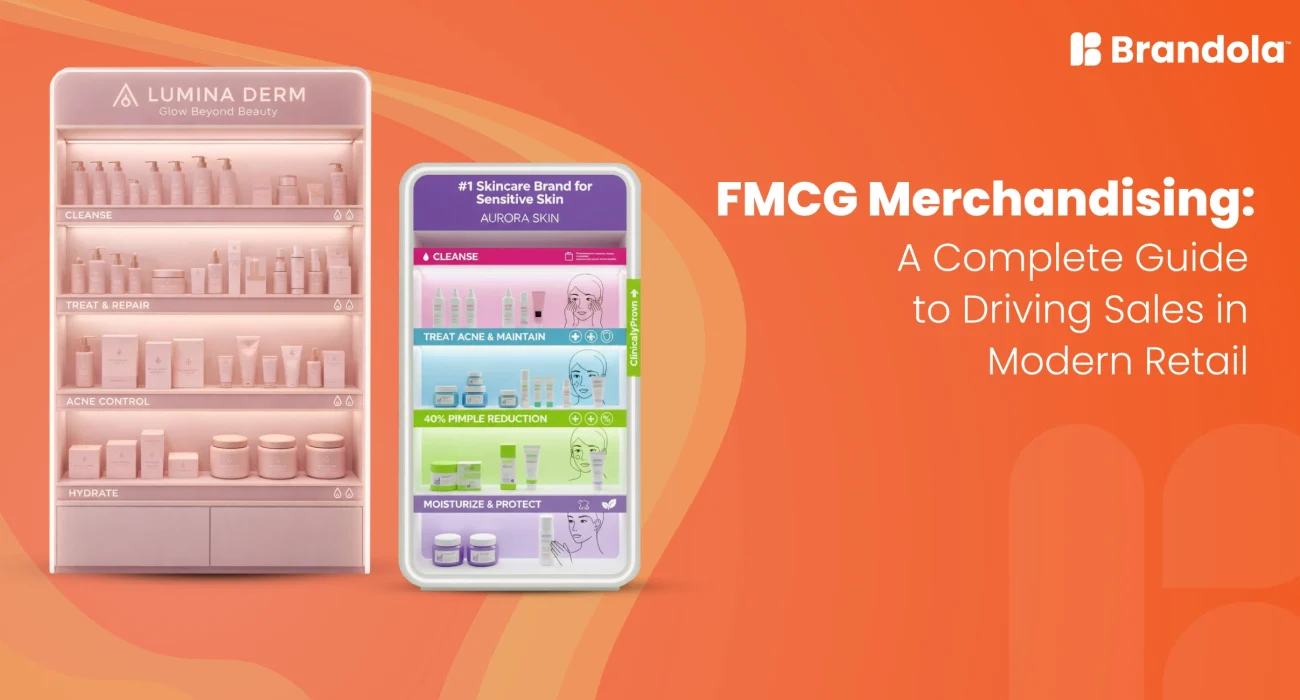

FMCG Merchandising: A Complete Guide to Driving Sales in Modern Retail
Merchandising plays a key role in consumer purchasing behavior across multiple retail formats in today’s fast-paced retail landscape. Wherever you place your product, be it in a Kirana store, a large format supermarket or a quick commerce platform, how you display your product, how you position it on a shelf, and what advertising you provide will have a direct impact on sales.
FMCG companies compete in highly competitive markets where many brands are vying for the same amount of shelf space and a diminishing amount of the shopper’s attention. While merchandise is simply about getting the right stock levels, the strategic influence of merchandising lies in influencing the shopper at the point of sale when making their purchasing decision.
This article will outline the definitions of FMCG Merchandising, how it operates through the channels of both the physical (offline) and digital (online) retail, the effects of merchandising on brand development, and guide on executing and implementing merchandising strategies, the common issues associated with merchandising, available tools and resources to assist with merchandising and current trends in merchandising which could potentially impact your business.
As either a small or medium-sized developing brand looking to expand your retail presence or as a larger established company looking to extend your retail footprint, this article has been developed to provide actionable insights to assist your business in achieving success.
What Is FMCG Merchandising?
FMCG (Fast-Moving Consumer Goods) merchandising is the way in which the strategic placement, presentation, pricing, and promotion of products that are rapidly sold through retail outlets can be optimized for maximum visibility and sale.
Real-World Examples
- Shampoo placed at eye level in a Supermarket
- Food display at the checkout area
- Buy 1 Get 1 Free or Buy One Get One Free shelf talker in a Kirana store
FMCG Merchandising vs General Retail Merchandising
Retail merchandising can be applied to many different types of products (apparel, electronics, etc.), but FMCG merchandising focuses on the fastest rotation, lowest margin products that are used every day by consumers, such as foods, beverages, personal care and household products. The focus is on speed, availability and how you create an impulse purchase of your products.
Offline vs Online FMCG Merchandising
- Offline: Planograms, Point of sale displays, In-store branding, Shelf placement.
- Online: How a product ranks on search results, how visible an item is when you have searched for it, how good your thumbnail images are, and reviews.
The “Digital Shelf” has replaced the physical shelf in online environments.
Why FMCG Merchandising Is Critical for Brand Growth
Effective Merchandising Affects:
1. The Sales Velocity of Products
Visibility is better; customers are picking items up faster and moving them through the store faster.
2. How Customers Remember Brands
Consistent corporate branding and strategically placed brand blocks can help customers remember brands better.
3. Consumers’ Purchasing Intentions
Placing strategic products with complementary products to the product being marketed can increase the overall price that consumers pay for their baskets.
4. Pricing Power (Pricing) and Brand Equity
Premium placement can support a higher perceived value by consumers.
5. Understanding How Shoppers Behave at the Shelf
Research also indicates that when it comes to making purchasing decisions at the shelf, most shoppers will take a look at an item for only a few seconds before they make their purchase; as such, impulse buying triggers have major impacts.
How FMCG Merchandising Works in Retail Stores
In-House Merchandising Teams
Pros:
- Better brand control
- Direct alignment with company goals
Cons:
- Limited scale
- Higher fixed costs
Best suited for brands with concentrated regional presence.
Partnering With a Merchandising Agency
Outsourcing offers:
- Nationwide execution scale
- Real-time reporting tools
- Technology integration
This model works well for expanding brands looking for structured field execution.
Field Execution & Store-Level Operations
- Scheduled store visits
- Shelf audits
- Stock replenishment checks
- Planogram compliance verification
- Execution reports
Consistency at store level determines campaign success.
Core Components of an Effective FMCG Merchandising Strategy
Planograms & Shelf Layout Optimization
- Eye-level placement = higher sales
- Category blocking for visibility
- Vertical shelving improves brand impact
Visual Merchandising
- Strong packaging design
- Clear fonts and brand colors
- Storytelling through shelf communication
Multiple Touchpoints in Store
- Gondola ends
- Dump bins
- Checkout counters
- Secondary placements
More touchpoints increase conversion probability.
Cross Merchandising
- Chips placed next to beverages
- Pasta placed near sauces
- Bundled offers for higher basket value
Pricing & Promotion Synchronization
- Shelf talkers highlighting offers
- Price-offs vs value packs
- Limited-time discount communication
Inventory & Stock Rotation Management
- FIFO (First In, First Out)
- Expiry checks
- Avoiding stock-outs
Retailer Compliance & Store Hygiene
- Adherence to planograms
- Clean, organized shelves
- Correct price tagging
FMCG Merchandising for E-Commerce & Quick Commerce
There are key differences between digital and physical merchandising.
The major differences between the two include:
- Search rankings versus shelf heights
- Keyword visibility
- Click-through rates through product images
Platforms such as , Zepto have:
- Title optimization is a key component of their digital strategy
- Ratings will affect what products consumers purchase
- Sponsored listings to drive traffic to the websites.
A company’s position on a digital planogram determines which product will show up at the top of a consumer’s search results.
Market Research & Consumer Insights in FMCG Merchandising
The key to doing a successful job at merchandising of FMCGs lies in understanding the shopper.
Shopper Behavior Studies
Study how shoppers navigate aisles as well as what will trigger them to make a purchase.
Regional Preferences
Certain regional markets may have a preference for spice flavors, while other markets (metro cities) may be more likely to buy organic items.
Millennial & Gen Z Buying Patterns
- Sustainable packaging is preferred
- Impulse buying is triggered by the aesthetic appeal of product displays
Understanding consumers allows for more targeted approaches to creating and placing product displays that create the most purchase intent.
Key Challenges in FMCG Merchandising
Limited shelf space
- Problem: too many brands competing for limited space on retail shop shelves.
- Solution: negotiate a block of space with the corporate and secondary display opportunities.
High product rotation
- Problem: inventory turns too fast, resulting in frequent stock-outs.
- Solution: real-time inventory monitoring to avoid stock-outs.
Retailer compliance issues
- Problem: planograms are not followed by retailers.
- Solution: provide audit-based reporting to retailers with incentives to comply.
Demand Forecasting Errors
- Problem: inaccurate forecasting results in overstock or understock situations.
- Solution: analysis of Sales data along with predictive tools will help prevent overstock and understock situations.
Technological gaps
- Problem: manual reporting delays problems from becoming resolved in a timely manner.
- Solution: use mobile apps for audits as well as artificial intelligence (AI) recognition systems to streamline manual reporting process.
Theft, shrinkage & damages
- Problem: missing inventory.
- Solution: secure placement of products to prevent theft and damage and regularly reconcile inventory to detect any discrepancies.
Data-Driven FMCG Merchandising & Reporting
Using modern tools in merchandising, for example:
- Store audit reports
- Image recognition software
- AI-based shelf compliance tracking
- Execution dashboards
By correlating sales data with store execution (the how), you can find out if a store is underperforming because of poor visibility.
Proven FMCG Merchandising Strategies That Drive Results
- Corporate Block Strategy
You can put all of your SKUs together in a block to help consumers remember your brand.
- Impulse Purchasing Optimisation
Smaller packs near cash registers will encourage the purchase of items that a customer did not originally intend to buy as impulse purchases.
- Store Assortment Optimisation for Local Demands
Optimize your stores’ product offerings according to local demand.
- Seasonal & Holiday Product Displays
Create special holiday display (e.g. Diwali gift pack) or seasonal product displays (e.g. summer beverages) to create additional opportunities to drive seasonal sales.
- Traffic Flow Optimisation
Position your highest margin items along the most frequently travelled paths in-store.
Real-World FMCG Merchandising Case Example
Problem: A mid-sized snack brand faced low visibility in supermarkets.
Strategy:
- Negotiated end-cap placements
- Introduced eye-level planograms
- Ran combo offers
Execution:
- Weekly audits
- Shelf image reporting
- Retailer training
Results:
- 28% sales increase in 3 months
- Reduced stock-outs
- Improved brand recall
Disciplined execution and data-backed optimization drove measurable growth.
Future Trends in FMCG Merchandising
- AI-driven planograms
- Real-time store analytics
- Omnichannel merchandising strategies
- Sustainable POS displays
- Eco-friendly packaging
Retail is becoming more technology-led and sustainability-focused.
Key Takeaways: Winning with FMCG Merchandising
- Visibility = Velocity
- Better Data Improves Execution Accuracy
- Planogram Compliance Ensures Consistency
- A digital shelf strategy should be considered just as important as your physical shelf strategy
- Cross-Merchandising Increases Basket Size
- The success of a merchandising program depends on discipline at the store level
Merchandising systems, such as those used by Brandola, provide a structure to build upon, enabling brands to potentially achieve great levels of growth.
Frequently Asked Questions (FAQs)
FMCG merchandising is the strategic display and promotion of Fast-Moving Consumer Goods (FMCG) with the purpose of maximizing sales at all retail touch points.
Attention to detail, analytical skills, retail knowledge, ability to communicate effectively and the ability to report on data.
Merchandising increases sales by making products easier to see, placing them in optimal locations for customers to make impulse buys and by increasing the likelihood of purchasing products as a result of product placement.
Mobile audit applications, planograms, artificial intelligence (AI) based shelf recognition tools and sales dashboards.
Convenience goods, shopping goods, specialty goods, and unsought goods.
Ensuring correct shelf placement, stock availability, compliance, and promotional execution.
Soap, toothpaste, biscuits, packaged beverages, and detergent.