

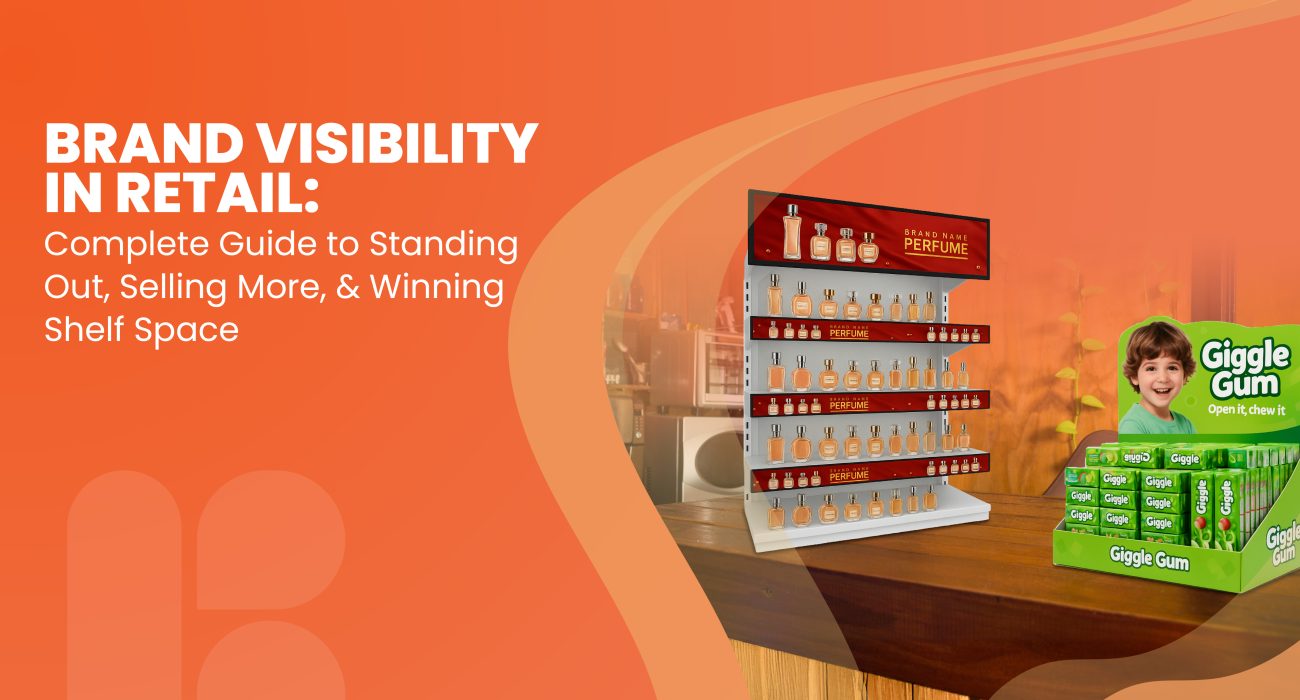
Brand Visibility in Retail: Complete Guide to Standing Out, Selling More, and Winning Shelf Space
What Is Brand Visibility in Retail?
Visibility of Brand = How easily consumers are able to see your products at retail (in-store or online) as well as be able to recognize them and remember what they are in terms of all visible aspects of your brand such as Shelf Presence, In-Store Branding, POP Displays, Signage, & All Visual Touchpoints that influence purchasing decisions.
Difference Between Brand Visibility, Brand Awareness & Brand Recall
- Brand Visibility: The visible information that a customer views at the time they make their purchase.
- Brand Awareness: The amount of prior knowledge a customer has when they enter the store to make a purchase.
- Brand Recall: The ability of a customer to remember (or recall) the brand during the shopping process, or after the shopping process is complete.
Visibility is what ultimately triggers the conversion of awareness into sales.
Customer Journey Touchpoints Where Visibility Matters Most
- Pre-Store – Ads, reviews, digital presence
- In-Visibility – Shelf placements, displays, promoters
- Post-Store – Packaging, repeat purchases, loyalty programs
Why Brand Visibility Matters in Modern Retail
Impact on Purchase Decisions
More than seventy percent of all purchasing decisions in retail are made in the aisle; it is therefore an area where the opportunity for impulse purchases and category leadership exists due to high visibility.
How Visibility Drives Market Share & Sell-Through
Visibility in a product’s category results in brands with consistent visibility having a greater opportunity to achieve better sell-through rates as shoppers can quickly locate and compare their products and options.
The Psychological Influence of Visual Cues on Shoppers
Color, shape, packaging, motion, and lighting are all visual cues which shoppers use to unconsciously navigate through a store. Visibility engages shopper’s cognitive shortcuts resulting in quicker shopping behavior.
Importance Across Retail Formats
- General Trade (GT) – Counter displays, danglers, wall branding
- Modern Trade (MT) – Gondolas, planograms, digital screens
- E-Commerce – Hero images, listings, reviews
- Q-Commerce – Thumbnail optimization, share-of-screen
- Pre Store (ATL) – Online Marketing
- In-Store (BTL) – Offline Marketing
The 360° Elements of Brand Visibility in Retail
1. Store Exterior & Signage
The exterior of a store creates an image for shoppers to see before they enter, through use of signs, display cases, awnings, and shutter boards, which all contribute to building a shopper’s perception of the store as a whole.
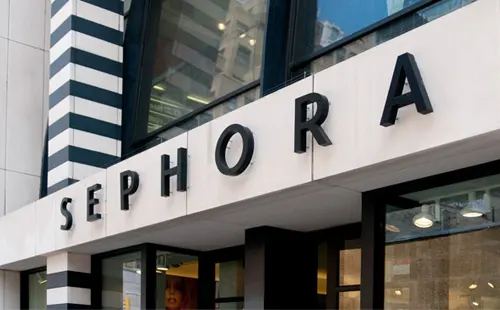
Image Source: amgraphretail.com
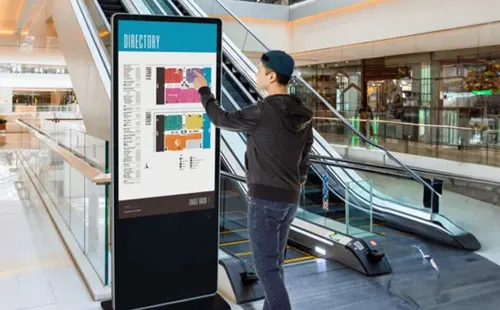
Image Source: Pickcel
2. Store Layout & Navigation
Shopper traffic flow through stores is created by how merchandise is placed on shelves and displays (category placement), where in-store path ways are designed (walk paths) and with signage directing shoppers to different parts of the store.
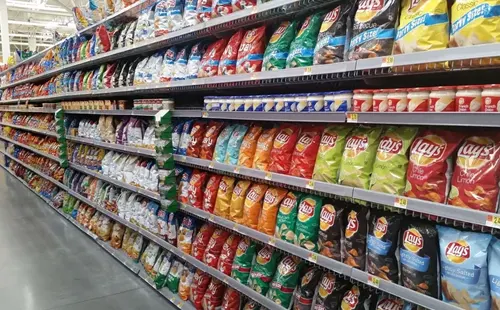
Image Source: Repsly – The 3 P’s of Shelf Presence
3. Shelf Placement & Category Positioning
Where the consumer places their eyes will be what the consumer purchases. Products that are placed at eye level are most likely to sell because consumers have a tendency to purchase products that are easiest to find.
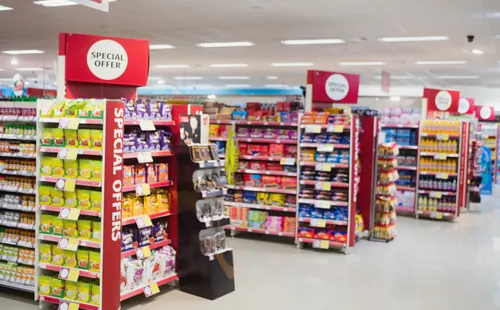
Image Source: thehandhgroup.com
4. In-Store Branding & POP Displays
In addition to where the product is located, how the product is displayed also impacts whether or not it will sell. Standalone displays, free standing displays, counter top displays and gondola header displays are some examples of point-of-purchase displays that can increase awareness of the product to potential customers.
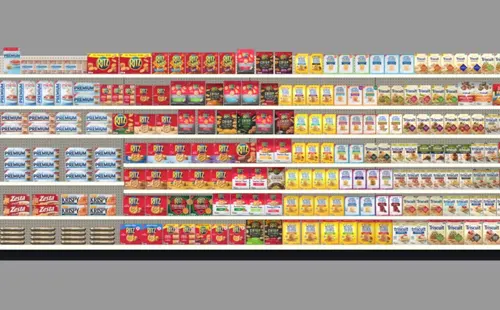
Image Source: readysetvr.com
5. Visual Merchandising & Planogram Execution
Visual merchandising refers to the art of creating displays that draw shoppers to specific products. Proper planograms, correct product placement, and color schemes are all part of visual merchandising and help to make a product visible to shoppers.
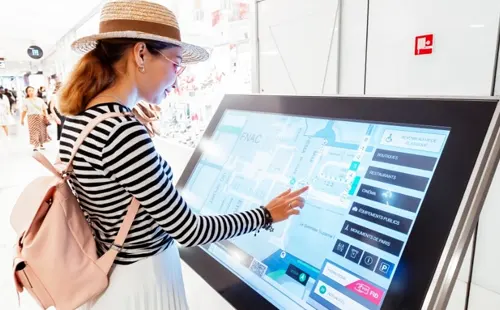
Image Source: pickcel.com
6. Promoters & Human Touchpoints
Sales associates play a critical role in creating a shopper’s positive experience in a store. They can answer questions about products, help with purchasing decisions, resolve objections and ultimately convert browsers into buyers.
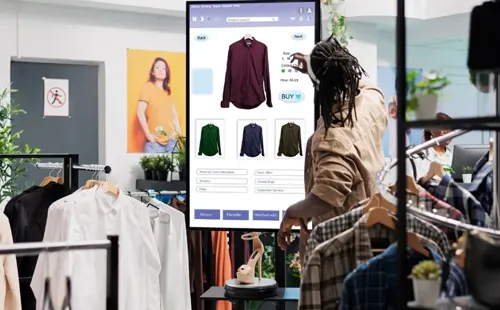
Image Source: tblocks.com
7. Digital Visibility Inside Stores
Digital displays such as smart screens, QR code displays and digital shelf displays allow for easy access to information about products being sold within a store and may also offer discounts and special promotions.
Advanced Strategies to Boost Brand Visibility in Retail
1. Dominating Eye-Level Shelf Space Strategically
Get your products in high traffic locations and make sure that they are visible on every side of a store.
2. Perfecting Planogram Compliance with Technology
Apps & audit software help you check and enforce planograms at each retail location.
3. Using AI-Driven Shelf Audits & Image Recognition
A.I. helps identify missed sku’s, incorrect placement & competitor opportunities immediately.
4. Hyper-Local Store Activation & Regional Customization
Customize your brand messages based on local holidays, language, and shopping habits.
5. Deploying Trained Retail Promoters & Brand Ambassadors
Educated and experienced sales representatives can educate shoppers about your products and provide samples.
6. Unlocking High-ROI Visual Merchandising Tactics
Create displays using color, lighting and themes that will increase awareness and create visibility.
7. Seasonal & Event-Led Visibility Enhancements
Increase visibility during Diwali, Christmas, Summer or specific category events.
8. Retail Co-Branding & Shopper Marketing Partnerships
Work with retailers to co-promote your products through joint marketing campaigns, signage and end cap branding.
9. Omnichannel Visibility – Connecting Offline & Online
Maintain consistent advertising (visuals) between online and offline advertising to create a trusted relationship.
Common Visibility Mistakes Brands Must Avoid
Inconsistent Brand Identity Across Stores
Colors, fonts, and messaging must remain standardized.
Poor Shelf Replenishment & Out-of-Stock Scenarios
Empty shelves kill visibility instantly.
Weak Promoter Training & Ineffective POS Presence
Untrained promoters = lost conversions
Ignoring Region-Specific Display Rules
Each retailer has unique guidelines; compliance builds credibility.
Over-Reliance on Discounts Instead of Branding
Discounts help temporarily; visibility builds long-term equity.
Low Investment in Retail Data & Intelligence
Data-driven execution outperforms guesswork every time.
How to Measure Brand Visibility in Retail (KPIs + Tools)
Key Metrics
- Share of Shelf
- Planogram Compliance
- OOS & Stock Availability
- POSM Deployment Rate
- Promoter Productivity
- Shopper Engagement Metrics
Tools & Technologies
- Image Recognition Systems
- Retail Execution Apps
- Trade Marketing Platforms
- Footfall & Heatmap Analytics
- POSM Tracking Software
Case Studies: How Leading Brands Achieved Retail Visibility Success
FMCG Example
A soft drink brand experienced an increase of 38% in retail sales volume as a result of in-store display improvements (eye-level facing) and overall in-visibility branding for that product line.
Electronics/Smartphone Example
An electronics manufacturer utilized AI technology to audit shelves for all of their products, achieving 90% planogram compliance throughout MT retail store locations.
Cosmetics/Beauty Example
A beauty company improved sample conversion rates through the use of trained promotional staff. As a result, they were able to improve sell-through by 22%.
Step-by-Step Retail Visibility Playbook (For Brands at Any Scale)
Step 1 – Audit Current Visibility
Analyze share of shelf, planogram execution, POSM use, and promoter performance.
Step 2 – Build a Store-Level Visibility Strategy
Set visibility objectives based on category, brand stage, and competition.
Step 3 – Deploy the Right Tools & Promoters
Use technology + trained manpower for consistent execution.
Step 4 – Track, Learn & Optimize Every Month
Use dashboards and analytics to refine strategies continuously.
Your Partner for Maximizing Brand Visibility in Retail – Brandola
What We Offer
Brandola delivers complete retail visibility solutions, from audits to POSM execution, promoter management, and tech-enabled shelf intelligence.
Why Brands Choose Us
- Pan-India execution
- Advanced retail technology
- Highly trained promoter teams
- End-to-end visibility dashboards
Case Studies or Client Success Metrics
Our clients have achieved:
- 40% increase in category visibility
- 35% improvement in OOS reduction
- 2X growth in promoter-led conversions
Get a Free Retail Visibility Audit
Book a no-cost consultation with Brandola to identify store-level visibility gaps and accelerate growth.
Frequently Asked Questions
Brand Visibility, or the visibility of a brand in a retail environment is a measure of how easy it is for a customer to visually identify your products (or SKUs) in a store through displays, signage, etc.
There are four ways to improve visibility, these include:
- Shelf Optimization
- Displays
- Promoters
- Point Of Sale Materials (POSM)
- Planogram Compliance
The following tools can be used to track visibility:
- Retail Execution Apps
- Image Recognition Systems
- POSM Tracers
- Heatmap Analytics
Share of shelf, OOS percentage, deployment rate, planogram score, and promoter productivity.
Awareness occurs before the shopper goes into a store; Visibility is what they see while shopping in a store.
Visual Merchandising enhances the aesthetic appeal of a product and encourages shoppers to interact with it.
A measure of how well a shopper can locate and recognize your brand within a store.
Visibility is defined as having the ability to clearly view and read any and all visual aids that will aid a shopper in making purchasing decisions such as:
- Shelf Presence
- Display
- Signage
- All other visual cues
This rule states that a shopper has three (3) seconds to visually stop and look at your brand, seven (7) seconds to capture their attention, and twenty-seven (27) seconds to provide them with a clear understanding of your brand message.
The four levels of brand awareness are:
- Unaware
- Recognition
- Recall
- Top-of-Mind
We at Brandola are happy to provide you with personalized insight into your branding needs, and a custom audit for your in-store branding; also, we will help you find a solution to take it to the next level.
Get a Free Consultation & Quote
Ready to light up your brand? Connect with Brandola today.
Let your business glow brighter with a custom glow sign board from Brandola.