


Visual Merchandising Methods: The Ultimate Guide to Boost Retail Sales
Introduction to visual merchandising
The term “visual merchandising” describes the deliberate arrangement of the product and the way it is displayed, including all the elements in a store, as well as the overall atmosphere or environment created by a retailer, so as to attract potential customers to create a positive shopping experience, while generating the highest possible revenue.
Retail design is often confused with visual merchandising; however, they are two different processes. While retail design primarily deals with the architectural features of a store including its floor plan, layout, walls, windows, doors, ceiling, etc., visual merchandising is concerned with creating an attractive and interesting arrangement of products, as well as using the colors of the products, themes, graphics, signage, and messages used within the design of the store, as well as using storytelling techniques to create an emotional connection between the consumer and the merchandise.
Ultimately, a good merchandising strategy determines how consumers will react to the store environment, where they will go, and how they will interact with the brand, therefore, it directly impacts the entire shopper’s experience from the time the consumer views the window display until checkout.
The Purpose of Visual Merchandising
Visual merchandising is based on an idea of inspiring the customer to make a purchase. Visual merchandising takes advantage of how people think when they shop, by making shopping easy and enjoyable for them. Good visual merchandising will show you your brands’ personality, evoke the correct feelings, and lead you to the merchandise with higher margins.
Visual merchandising will allow you to convert a passive browser into an active buyer. By showing your products in a way that makes them look valuable, trustworthy, and desirable, you increase the chances that you will sell them at full price.
The Core Elements of Visual Merchandising
Focal Point Creation
This is what creates a “Hero” for the display and captures their attention immediately. The focal point lets the shopper see what is being promoted and know why it is being promoted in less than one second.
Utilizing Space
Retailers who use their vertical and horizontal space effectively create displays that capture the shopper’s eye. They create displays that encourage the shopper to browse their merchandise easily, and ensure that there is enough room for all the merchandise to be displayed. The retailer needs to balance the amount of vertical and horizontal space that they use to create a cohesive look, to keep the shopper from feeling overwhelmed and to make sure that they have enough space to see everything they need to.
Lighting Design
Lighting affects the mood of the shopper, how visible the merchandise is and how attractive it looks. Retailers who want to attract attention to certain items can use accent lighting to do so. Ambient lighting is used to set the tone for the store, and task lighting is used to let the shopper take a closer look at the merchandise.
Color Psychology
Colors affect how a person feels about a brand, whether or not they remember the brand, and whether or not they will buy from the brand. Colors can either energize a shopper (warm), calm a shopper (cool), or attract a shopper’s attention (bold). Retailers can use color to highlight special promotions or new merchandise.
Positioning Products
Eye level is “Buy Level.” Strategically placing the most profitable items at the highest levels, keeping items that are frequently purchased in easy-to-reach locations, and creating highlight areas for new merchandise, allows you to create a visually appealing display that is also functional.
Signage and Communicating
Signs can communicate information, persuade, or decorate. Signs can direct shoppers, inform them of pricing or promotions, and reinforce the tone of the brand.
Props and Fixtures
Props can provide context and add stories to the visual display. Fixtures such as mannequins, risers, and shelving, can be used to build the display, and improve its visual appeal.
10 Proven Visual Merchandising Methods for Modern Retailers
Here are the new-age effective visual merchandising techniques that will beat the traditional approaches of all retail businesses & be a head start in comparison with other retail companies:
Design for the Five Senses
1: Sight
Visual attractiveness is achieved by using color, contrasting colors, lighting, & overall arrangement of products on displays.
2: Touch
By allowing customers to touch or feel textures & materials on items, they tend to increase their chances of buying those items.
3: Smell
Recall of products is increased & shopping time extended when scents are used as part of marketing efforts. Retailers have found florals, citrus & vanilla to be very successful scents.
4: Sound
The right background music selection has an influence on shopper’s mood & shopping speed.
5: Taste
An essential method for food and beverage (F&B) retailers – sampling helps engage & build brand loyalty immediately.
Apply Design Theory Principles
Apply structure to a visually appealing display by utilizing; balance (either symmetrical or asymmetrical), contrast, whitespace, unity, and repetition.
Master Store Layout & Customer Flow
Choose an effective layout style for your Master Store including grid, free flow, racetrack, or a combination of both to direct customers to areas that you have designated as priority zones. The correct circulation pattern will allow customers to explore your entire store and increase their basket sizes.
Use Color Theory Strategically
Associate color(s) used throughout your store with the characteristics associated with your brands personality and seasonally. Warm colors stimulate impulse buying, whereas cooler colors promote a calming effect on purchasing decisions.
Leverage Product Grouping Techniques
Using cross merchandising, bundle displays, and arranging products in a story format, allow your customer to visualize purchasing a solution rather than just one item.
Seasonal & Thematic Displays
Your store has numerous opportunities to update its visual aspects through festivals, local events, cultural events, and seasonal changes.
Integrate Digital & Interactive Signage
Display technologies such as digital screens, AR Mirrors, Touch Screens, and Dynamic Price Tags enhance the shopper experience, and provide additional experiential elements to the shopping experience.
Experiment with Window Displays
As the most visible representation of your store, the window display serves as your store’s most important advertisement. Utilizing innovative display styling techniques, layering your composition, and using proper lighting, you can transform a passerby into a walk-in.
Regularly Refresh & Analyze Displays
Utilizing Data Driven Insights to evaluate your display performance. Use A/B testing to compare different layouts, signage, and product placements to determine which performs best for your business.
Incorporate Sustainability in Design
By using sustainable materials, repurposing props and packaging, using modular fixtures, and minimizing waste, you can show that your business is environmentally conscious and may attract conscious consumers.
Visual Merchandising in Different Retail Formats
Apparel & Fashion Stores
Mannequin displays with clothing combinations, bold colored backgrounds, and display of garments near consumers can help create an environment that inspires customer styling.
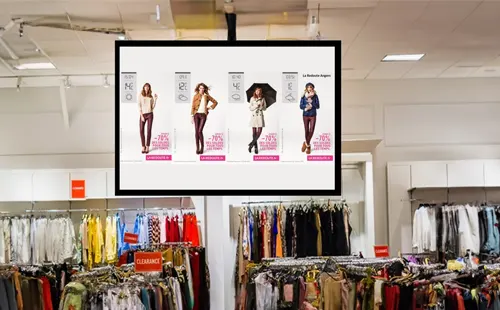
Image Source: Pickcel Winter Fashion Trends
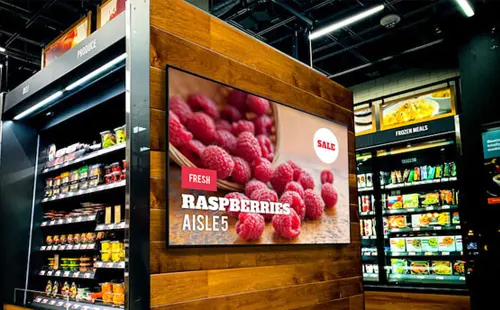
Image Source: Pickcel Blog
Supermarkets & Grocery Stores
The use of planogramming, category signage, and overhead lighting for fresh produce are all effective in increasing average basket size. Additionally, cross-merchandising products like pasta and sauce together will also increase sales.
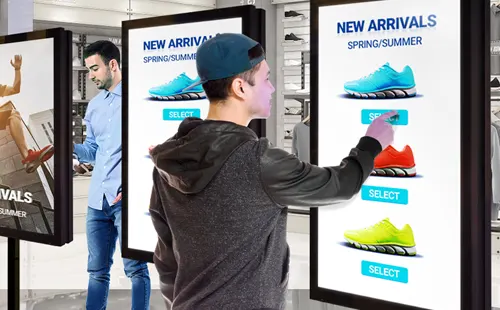
Image Source: LG Information Display
Electronics & Lifestyle Stores
Displaying demonstration areas, using digital screens to demonstrate product capabilities, and keeping store displays very simple and uncluttered will allow customers to test the product themselves and find information about it easily.
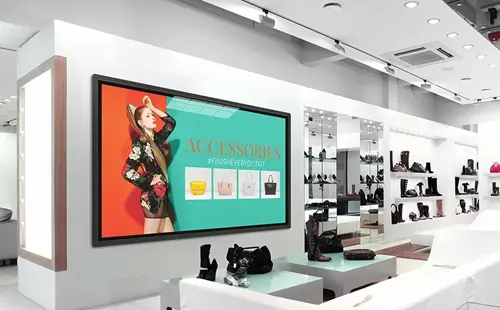
Image Source: Digital Signage Today
Luxury Retail
Retailers wishing to convey a sense of luxury and high-end quality should employ understated elegance, use controlled lighting to create ambiance, incorporate premium props into their store design, and keep their store layout as simple as possible.

Image Source: dsigns.com
Pop-ups & Experience Centers
Create an immersive experience by incorporating theme-based interior design, sensory experiences, and digital technology in order to create maximum effect from a small footprint and short-term presence.
Modern Tools & Technologies in Visual Merchandising
Planograms & Shelf Management Software
Automate and optimize aisle layout design, merchandise arrangement, and visual merchandising consistency for all stores.
Augmented Reality (AR) in Retail Design
Enable customers to virtually try on products using AR; enable retailers to create interactive product demonstrations and digital product visualizations.
3D Visualizers & Digital Twins
Create digital versions of your store spaces to plan and test new store layouts and retail merchandising concepts prior to actual construction.
Common Visual Merchandising Mistakes to Avoid
- Cluttered or Overpopulated Displays
- Insufficient Lighting; Poor Signage
- Testing Layouts; Studying Customer Flow
- Visuals Do Not Match Brand Identity
- Not Adapting to Changing Trends/Seasonal Opportunities
How to Create an Effective Visual Merchandising Strategy
- Research Target Customers & Brand Position
- Determine Goals (Traffic, Conversion, Engagement, etc.)
- Create Layouts/Displays That Support Those Objectives
- Execute Consistently, High Quality & Accurately
- Continuously Monitor & Optimize Using Analytics & Shopper Feedback.
Should You Hire a Visual Merchandiser or DIY?
Visual merchandising professionals can be expected to have an understanding of design psychology, consumer behavior and how to create commercial displays.
A DIY approach will work for some small businesses, but hiring a professional is generally preferred as a more effective method of providing high-quality and greater return on investment.
When deciding whether to spend money on a particular project, compare the initial expense to the long-term potential return. Quality visual merchandise has a significant impact on conversion rates. The overall cost should be compared to the increase in sales you expect as a result of the improved shopping experience.
Future Trends in Visual Merchandising (2025 & Beyond)
- Storytelling environments that engage consumers with the products they are purchasing
- Product recommendations generated by AI technology
- Shelves that use smart technology and track items sold in real time
- Digital displays that provide hyper-personalized marketing messages to shoppers based on their previous purchases
- Modular and sustainable display systems.
Visual Merchandising FAQs
Display and Window Displays, Digital Signage, Mannequins, Shelf Merchandising, Themed Zones and In-Store Displays.
Example: Grouping products and accessories together for a specific theme such as grouping beachwear with beach items, which allows the customer to visualize using those products.
The amount of time needed to update displays will depend on many factors but generally updates should occur every two to four weeks, or at least during seasonal or promotional events.
Some of the key skills a visual merchandiser may possess include creativity, ability to think from a design perspective, understanding of retail psychology, ability to analyze data and ability to execute technical tasks.
Visual merchandising is a combination of both design and marketing, presenting merchandise through creative design while developing strategic marketing efforts.
Conclusion
Retailers can create environments in their stores that drive higher sales by creating a more enjoyable shopping experience for customers and by utilizing visual merchandising effectively and efficiently. The use of successful strategies and being knowledgeable about current trends can help make a retailer’s stores high performing sales generating environments.